
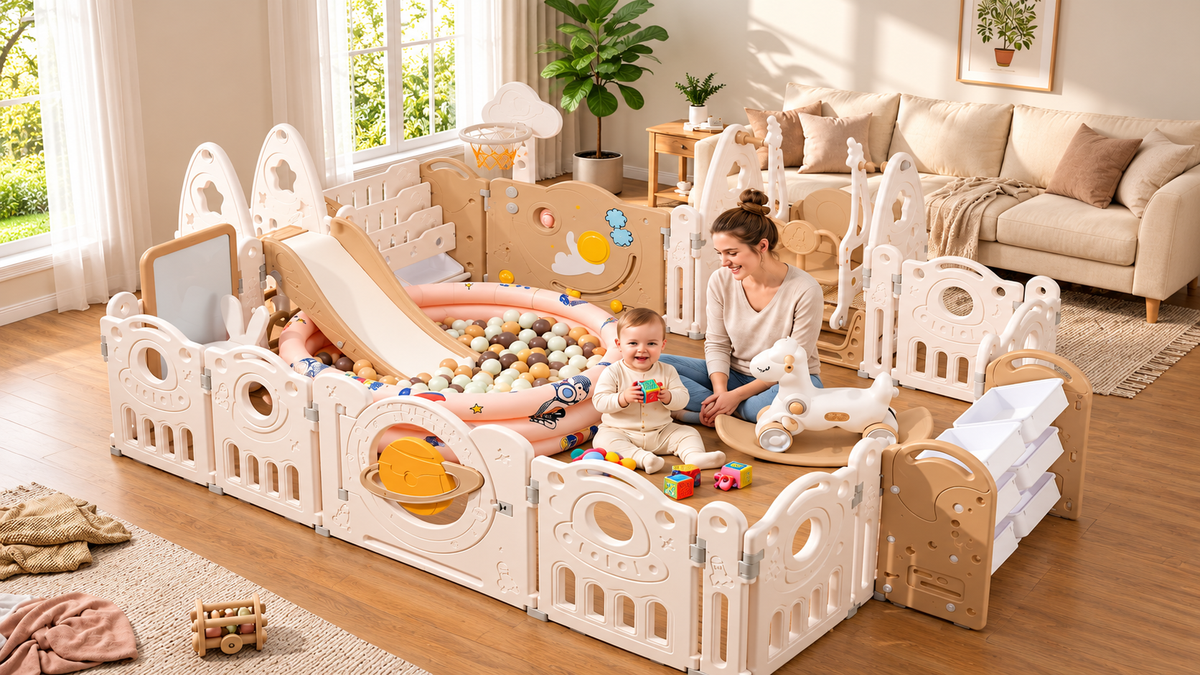
A playpen can be the difference between making lunch with both hands free and trying to stir pasta while a determined crawler heads for the dog bowl. Knowing how to choose a baby playpen comes down to more than picking a cute colour or the biggest size. The right one needs to create a genuinely safe play space, fit your room and suit the way your family actually lives.
For many Aussie families, that might mean setting up beside the lounge during morning coffee, moving it to a tiled living area for messy play, or creating a protected zone while older siblings race around after school. A good playpen gives babies room to explore and gives carers a little breathing space - while never replacing close supervision.
Start with your child’s stage and your reason for buying
Before comparing panels, mats and dimensions, think about what you need the playpen to do. A young baby may use it as a clean, enclosed floor-time zone with a supportive play mat. Once your little one is rolling, crawling, pulling up and cruising, secure sides and a stable base become far more important.
Your main purpose also matters. If you want a safe everyday play zone in the family room, a larger modular playpen is often the best fit. If you need something you can pack for holidays, visits to the grandparents or weekends away, portability and quick folding may matter more than a roomy layout. There is no single best option, only the right balance for your routine.
Remember that babies grow quickly. A compact pen may feel generous for a six-month-old, then become frustrating once they are confidently on the move. Choosing a flexible design from the beginning can save you from replacing it sooner than expected.
How to choose a baby playpen by measuring first
The most common mistake is choosing a playpen based on photos, then discovering it takes over the lounge room. Measure the floor area where you expect to use it most, including the space needed to open a gate, walk around it and access nearby furniture.
Modular playpens are especially handy for real Aussie homes because they can often be arranged as a square, rectangle or longer narrow zone. This helps when you have an open-plan living area, an awkward corner or a room shared with a dining table. More panels usually mean more room to tailor the layout, but they also mean a bigger footprint and more pieces to store if you pack it away.
Use these quick checks before you commit:
- Measure the available floor space, not just the wall-to-wall room size.
- Check whether doors, drawers, sliding doors or a hallway need to remain clear.
- Allow enough room for an adult to open and close the playpen gate comfortably.
- Consider where the playpen will go when visitors arrive or your child no longer needs it.
Put safety features ahead of extras
A playpen should have a stable, secure structure that suits an active child. Look for smooth, well-finished surfaces, secure connections between panels and a gate that adults can operate without fuss but a curious toddler cannot easily open. If the playpen has non-slip pads or suction feet, these can be useful on hard floors, although they still need regular checks.
Panel height matters once babies begin pulling themselves upright. Choose sides high enough to help contain your child at their current stage and follow the manufacturer’s age, height and weight guidance. A playpen is not designed to contain a climbing child forever, so reassess its suitability as your little one becomes more adventurous.
Mesh-sided options can provide visibility and airflow, while solid plastic panels may be easier to wipe after snack time or sticky fingers. Whichever style you prefer, inspect it regularly for tears, loose fittings, cracks, worn padding or gaps where little fingers could get caught. Stop using it if anything is damaged.
Placement is part of playpen safety too. Keep it away from heaters, power points, cords, blinds, curtains, windows, furniture that can be climbed, pet bowls and anything a baby could pull into the play area. Avoid placing it on an elevated surface. Even the safest-looking setup needs an attentive adult nearby.
Choose materials that suit everyday clean-up
Babies are enthusiastic mess-makers. Drool, snacks, nappy leaks, textas from an older sibling and the occasional muddy toy all find their way into family spaces. Easy-clean materials are worth prioritising, particularly if the playpen will live in a high-traffic area.
Plastic modular panels tend to be simple to wipe down and can work well with a separate foam mat. Fabric travel-style playpens may feel softer and fold away neatly, but they can take longer to clean and dry. Wooden designs can look at home with your furniture, yet you will want to check for a smooth finish and follow the care instructions closely.
A padded mat can make floor play more comfortable, especially over tiles, timber or concrete-look flooring. It should sit flat without curling edges or sliding around. Avoid adding loose pillows, thick bedding or unsuitable soft items inside the playpen, particularly for young babies. Keep the space simple, clear and age-appropriate.
Think about the gate before you buy
A gate sounds like a small feature until you are carrying a baby, laundry and a cup of tea at the same time. A walk-through gate can make daily use much easier than lifting your child over the side, especially as they get heavier. It also reduces the temptation to lean awkwardly across panels.
Check the direction the gate opens, the latch position and whether it needs one or two hands. A secure latch is essential, but it should not make every entry and exit a battle. If grandparents or another carer will use the playpen, choose a mechanism they can confidently manage as well.
Match the playpen to the rest of the home
A playpen works best as one part of a safer family setup, not as a reason to stop babyproofing. You may still need safety gates at stairs, secured furniture, covered power points and careful storage for medicines, cleaning products and small objects.
If you have pets, a playpen can create welcome separation during feeding, tummy time and busy periods. Introduce it gradually so your dog or cat does not see it as a new obstacle to investigate. For homes with older children, explain that the playpen is the baby’s zone, not somewhere to toss tiny toys or climb over the panels.
It is also worth thinking about how long you want the playpen to serve your family. Modular styles can sometimes be reconfigured as a toy zone or used around a ball pit once the baby stage has passed. That flexibility can offer better value, provided the design still suits your space now.
Don’t overlook delivery, assembly and support
Large baby products are exciting to order but can be inconvenient if you are caught out by bulky boxes, unclear stock details or complicated assembly. Before buying online, check the stated dimensions, what is included, whether a mat is separate, estimated delivery timing and assembly requirements. Save the instructions and keep any spare connectors in a labelled spot.
At Micky Mart, families can browse practical play solutions designed for everyday life, with clear delivery information and support when questions come up. Once your playpen arrives, assemble it carefully on a flat surface, test every connection and give it a quick check before each use.
The best playpen is not the fanciest one. It is the one that gives your child a comfortable place to play, fits naturally into your day and lets you enjoy those busy little moments with a bit more confidence.


Leave a comment
This site is protected by hCaptcha and the hCaptcha Privacy Policy and Terms of Service apply.